Barahnaja organics
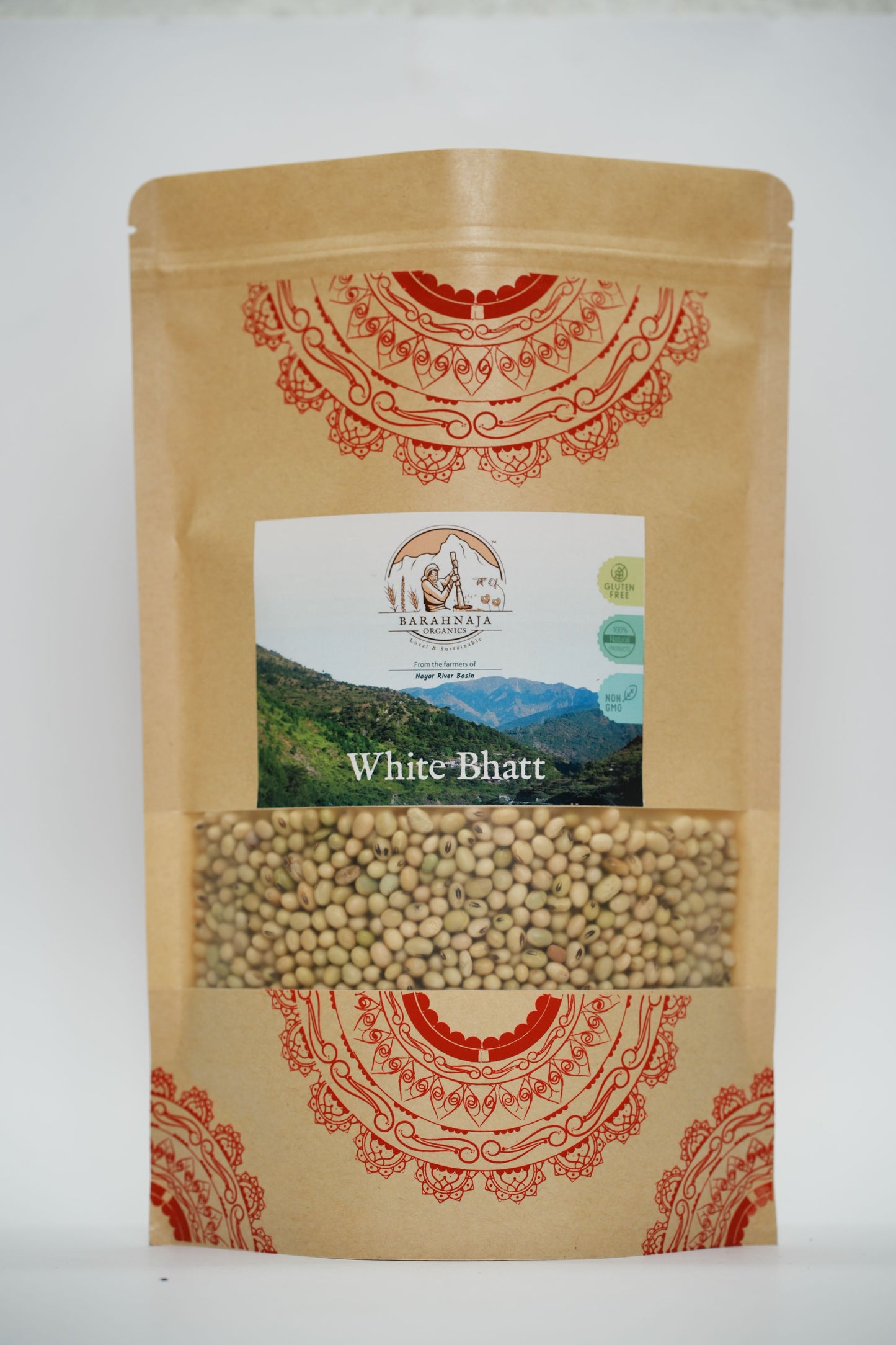
White Bhatt
White Bhatt
Mandakini river Basin, Uttarakhand
2300 ft
✅ Single-origin Himalayan pulses
✅ Local & seasonally grown
✅ Naturally rich in plant protein
Harvested once a year. Limited quantities
Unpolished/ Natural
Local & Seasonally Grown
Farm/ Source identity
High Protein/ Nutrition
Couldn't load pickup availability
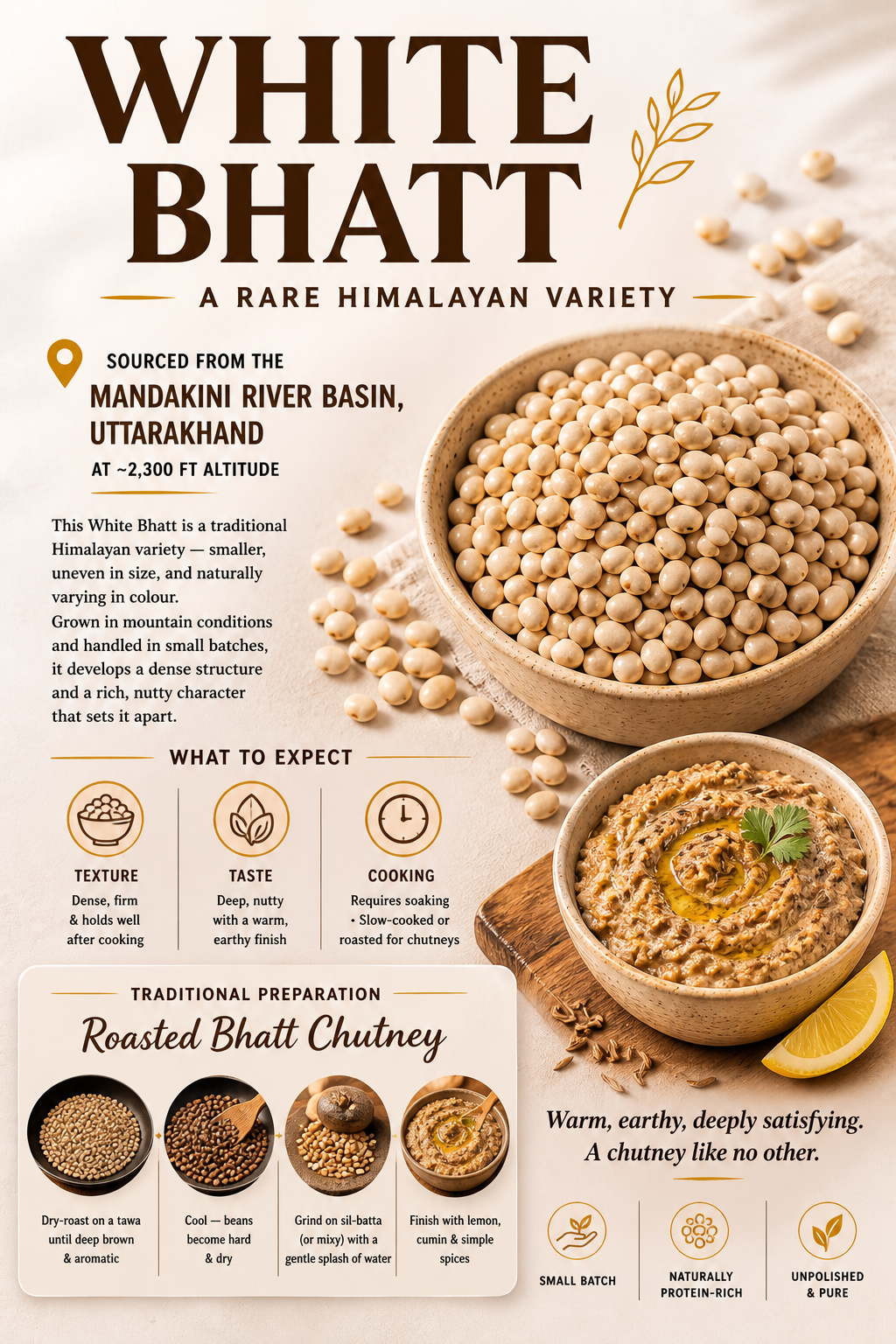
Sourced from the Mandakini river basin in Uttarakhand at around 2,300 ft, this White Bhatt is a traditional Himalayan variety often mistaken for soybean, but distinct in its smaller, uneven size and naturally varying color. Grown in mountain conditions and handled in small batches, it develops a dense structure and a rich, nutty character shaped by its origin.
⸻
What to Expect
• Texture: Dense, firm and holds well after cooking
• Taste: Deep, nutty with a warm, earthy finish
• Cooking: Requires soaking • Can be slow-cooked or roasted for traditional chutneys
Know Your Pulses
Know Your Pulses
This soybean is grown in the Himalayan slopes at an altitude till 5000 feet. This particular variety is harvested from the Mandakini valley of Uttarakhand. This species of legume widely grown for its edible bean, which has numerous uses. Soybeans contain significant amounts of phytic acid, dietary minerals and B vitamins.
Benefits & Uses
Benefits & Uses
Soybean has a high-quality protein. It is one of the few known plant foods (the other is amaranth seed and to a lesser degree, quinoa) to contain all the essential amino acids, like those found in meat.
The soybean is:
high in fibre
high in protein
low in saturated fat
cholesterol free
lactose free
a good source of omega-3 fatty acids
a source of antioxidants
high in phytoestrogens.
Nutrition Information
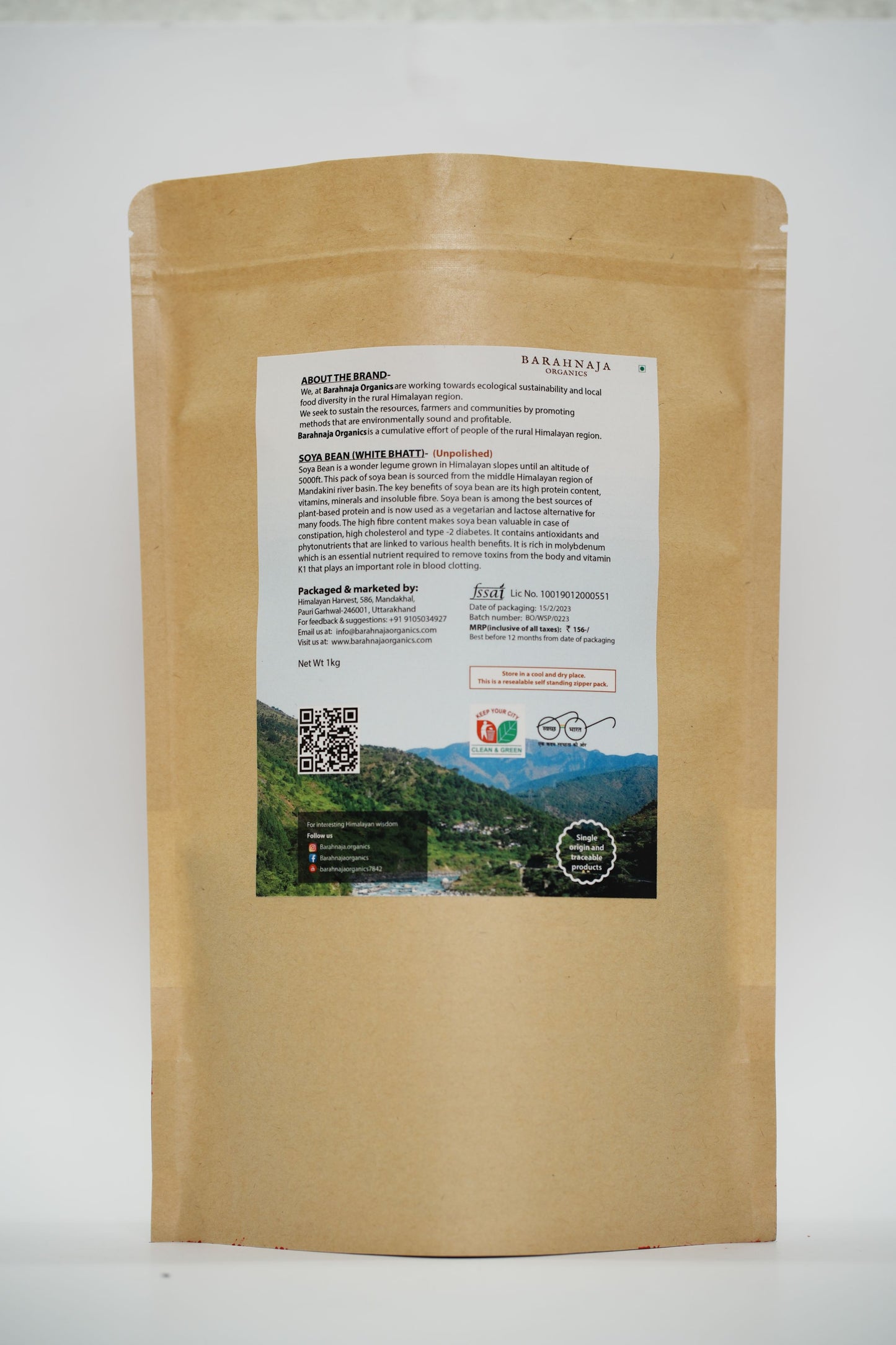
Packaging Information
Packaging designed to retain the goodness of pulses.
Shipping & Delivery
Shipping & Delivery
Shipping duration
Bluedart air- 3 to 7 days depending on the distance.
Storage
Storage
Keep your favorite Barahnaja organics grain and legumes in a cool and dry place in an air tight container/pouch.
Share

You Asked, We Answered
FAQs
What makes your pulses different from regular market pulses?
Our pulses are sourced from specific Himalayan regions and grown in small batches. Unlike the uniform, mass-produced varieties in the plains, they are naturally variable in size, colour and shape, reflecting their local origin and traditional cultivation.
Why do the grains look uneven or different in color?
This is natural. These are traditional, unstandardised varieties that are not polished or artificially sorted for uniform appearance. The variation in color and size is a sign of authenticity, not inconsistency.
Do Himalayan pulses taste different?
Yes, they do. Grown in colder climates and over longer periods, these pulses develop a deeper, more pronounced flavour compared to regular varieties.
Do these pulses take longer to cook?
They may take slightly longer than polished or hybrid varieties. Soaking before cooking is recommended to achieve the best texture and flavour.
Are these pulses organic?
Our pulses are grown in traditional farming systems with minimal external inputs. While not always formally certified, they are cultivated using practices that are 100% Organic.
Why are these pulses more expensive
These are not commodity crops. They are grown in difficult mountain conditions, harvested in limited quantities, and handled manually. The pricing reflects their origin, scale and quality.
Why are these available only in limited quantities?
These pulses are grown seasonally in small regions and are not mass cultivated. Availability depends on harvest cycles and is therefore limited.