Skip to product information
1 of 2

Barahnaja organics

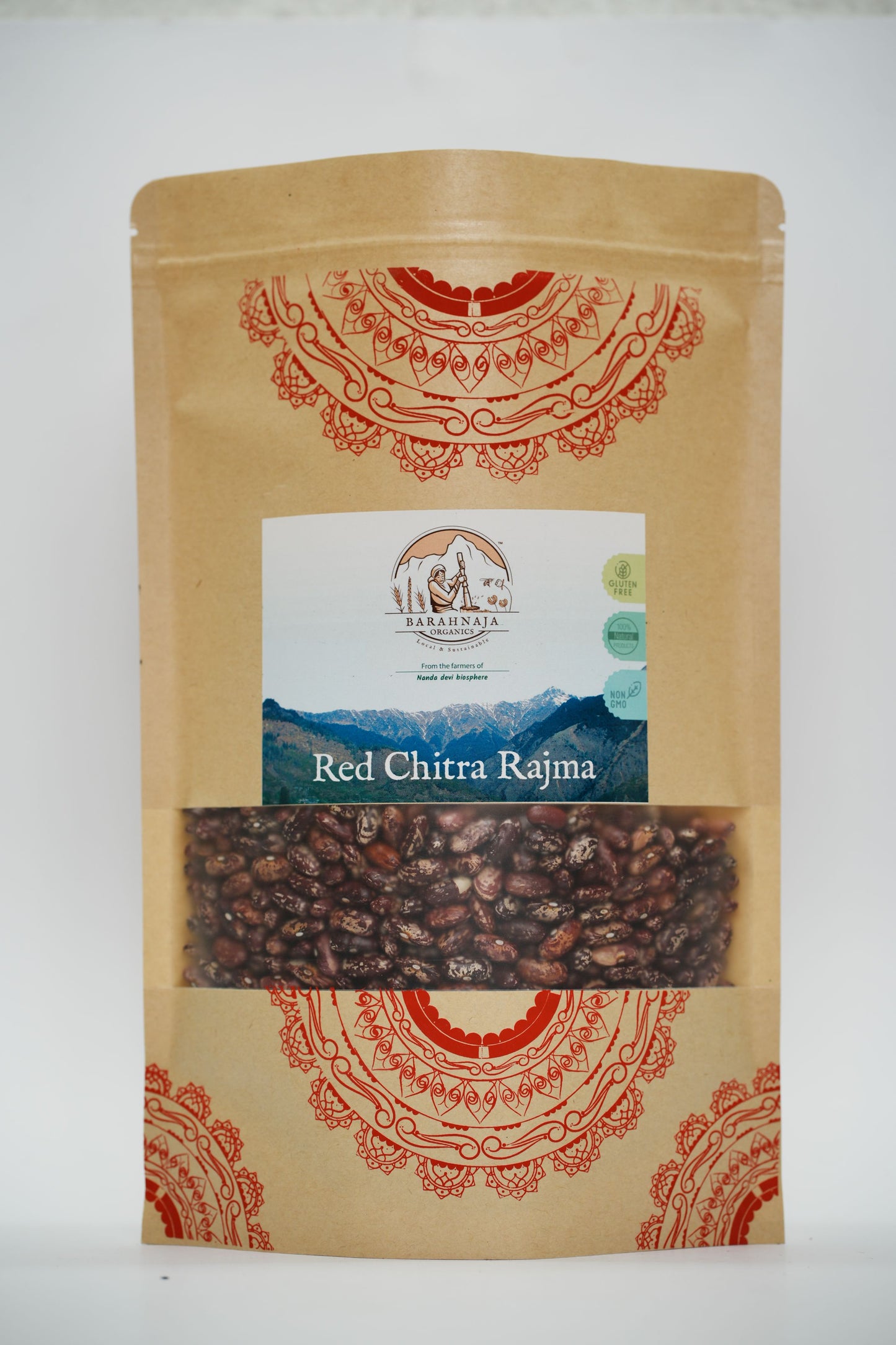
Red chitra rajma

Red chitra rajma

Nanda Devi Biosphere, Uttarakhand

7000 feet

Regular price Rs. 145.00
Regular price Rs. 160.00 Sale price Rs. 145.00
Sale Sold out
Taxes included.

✅ Single-origin Himalayan pulses

✅ Local & seasonally grown

✅ Naturally rich in plant protein

Harvested once a year. Limited quantities

Size
Quantity
  • Unpolished/ Natural
  • Local & Seasonally Grown
  • Farm/ Source identity
  • High Protein/ Nutrition

Grown at around 7,500 ft in the Urgam Valley of Chamoli, where the climate is cool and the growing season is short. These dark maroon chitra rajma mature slowly, developing a firm texture and rich, earthy character shaped by the Himalayan terrain.

What to Expect

• Texture: Firm, holds shape after cooking
Taste: Earthy, slightly robust
Cooking: Requires soaking • Best slow-cooked

Know Your Pulses

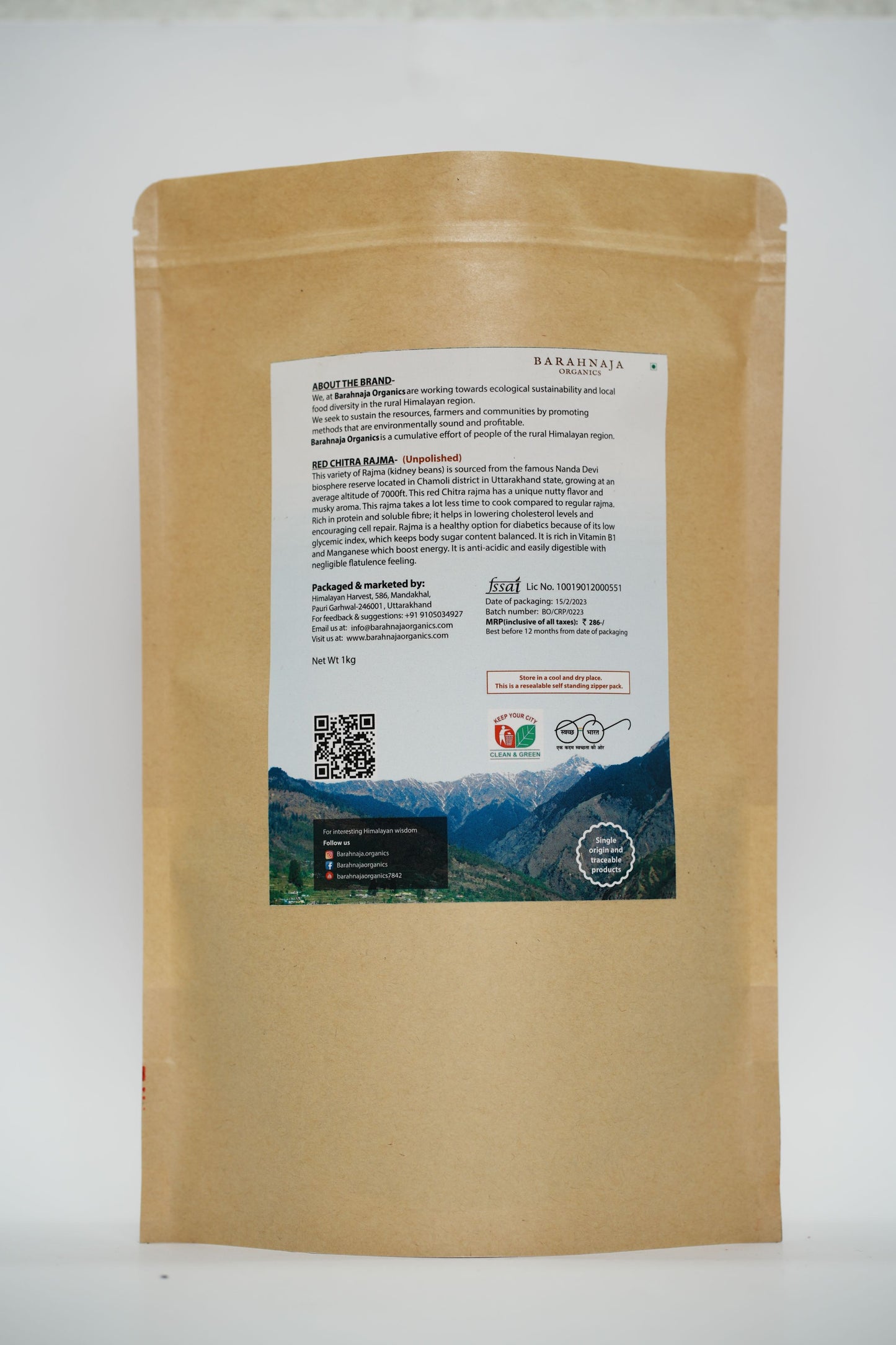
Red Chitra rajma (kidney beans) is sourced from the famous Nanda Devi biosphere reserve located in Chamoli district in Uttarakhand state, growing at an average altitude of 7000ft.
This red Chitra rajma has a unique nutty flavor and musky aroma.

Benefits & Uses

1. This red Chitra rajma has a unique nutty flavor and musky aroma.
2. This rajma takes a lot less time to cook compared to regular rajma.
3. It is rich in Vitamin B1 and Manganese which boost energy.
4.It is anti-acidic and easily digestible with negligible flatulence feeling.


Nutrition Information

Packaging Information

Packaging designed to retain the goodness of pulses.

Shipping & Delivery

Shipping duration

Bluedart air- 3 to 7 days depending on the distance.

Storage

Keep your favorite Barahnaja organics grain and legumes in a cool and dry place in an air tight container/pouch.

View full details

You Asked, We Answered

FAQs

What makes your pulses different from regular market pulses?

Our pulses are sourced from specific Himalayan regions and grown in small batches. Unlike the uniform, mass-produced varieties in the plains, they are naturally variable in size, colour and shape, reflecting their local origin and traditional cultivation.

Why do the grains look uneven or different in color?

This is natural. These are traditional, unstandardised varieties that are not polished or artificially sorted for uniform appearance. The variation in color and size is a sign of authenticity, not inconsistency.

Do Himalayan pulses taste different?

Yes, they do. Grown in colder climates and over longer periods, these pulses develop a deeper, more pronounced flavour compared to regular varieties.

Do these pulses take longer to cook?

They may take slightly longer than polished or hybrid varieties. Soaking before cooking is recommended to achieve the best texture and flavour.

Are these pulses organic?

Our pulses are grown in traditional farming systems with minimal external inputs. While not always formally certified, they are cultivated using practices that are 100% Organic.

Why are these pulses more expensive

These are not commodity crops. They are grown in difficult mountain conditions, harvested in limited quantities, and handled manually. The pricing reflects their origin, scale and quality.

Why are these available only in limited quantities?

These pulses are grown seasonally in small regions and are not mass cultivated. Availability depends on harvest cycles and is therefore limited.